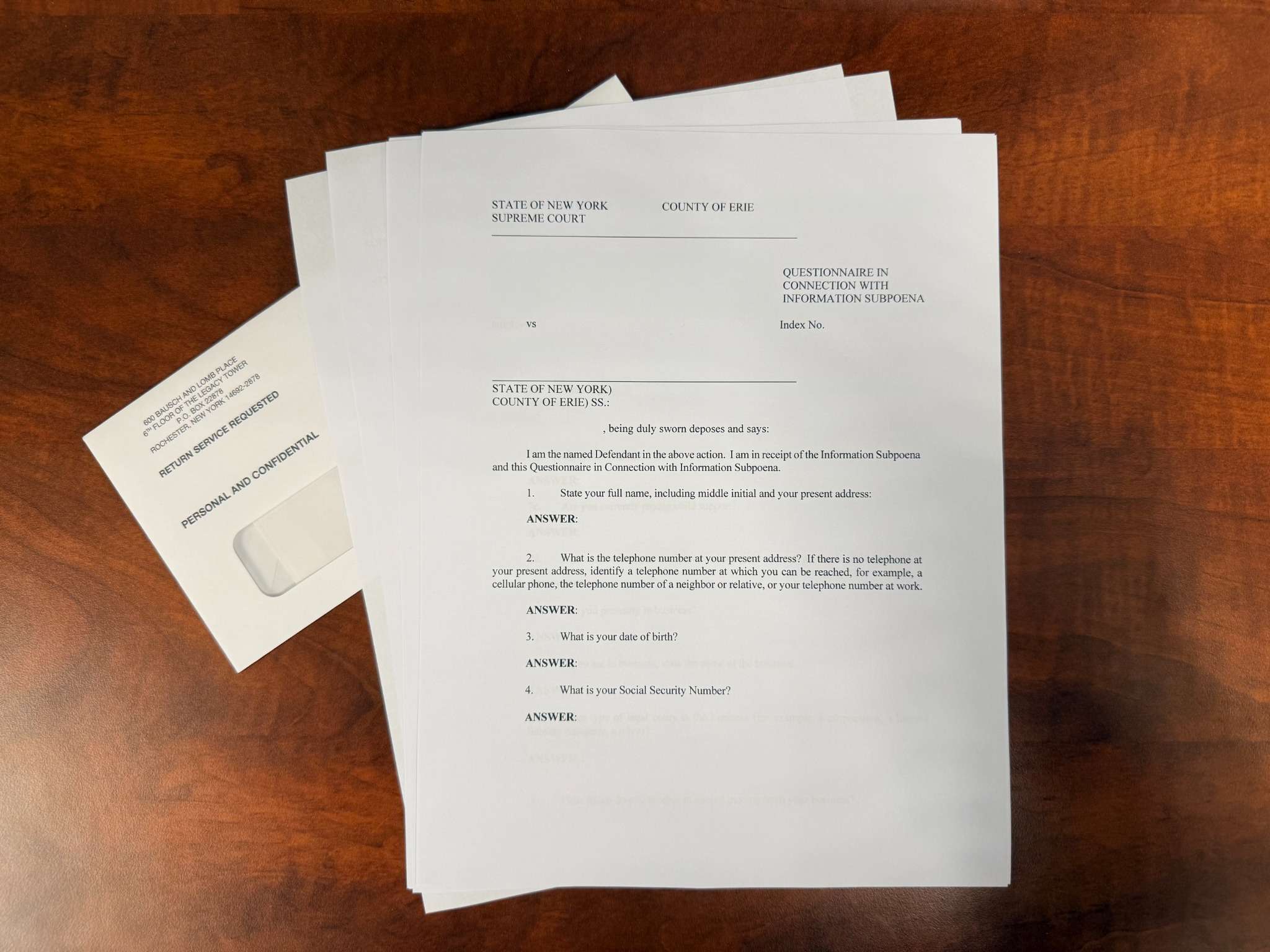
When a creditor wins a case, many assume the hardest part is over. Unfortunately, that is not always the case. In reality, obtaining a judgment and actually collecting on that judgment are two very different things, and if you are dealing with a debtor who is unwilling to pay, you may already be realizing this firsthand. That is why the law provides creditors with certain tools designed to uncover assets and move the collection process forward. One of the most effective of these tools is known as an information subpoena. Continue reading and reach out to a Rochester collections lawyer from Lacy Katzen LLP to learn more about what this is and how it may help you. Here are some of the questions you may have:
What does an information subpoena do in New York collections?
Simply put, an information subpoena is used to gather financial information about a debtor after a judgment has been entered. Because debtors do not always voluntarily disclose where their money or assets are located, this document serves as a formal way to require that information. In most cases, an information subpoena allows a creditor to:
- Request specific financial details directly from the debtor, including income sources and account information
- Obtain records from third parties, such as banks or employers, who may have knowledge of the debtor’s finances
- Identify assets that may be subject to collection, including wages, accounts, or other property
- Require written responses under oath, typically within a set period of time
Who can receive an information subpoena?
An information subpoena is not limited solely to the debtor, which is part of what makes it particularly useful. In many cases, third parties who may have relevant knowledge can also be required to respond. Generally speaking, an information subpoena may be served on:
- The judgment debtor
- Financial institutions where the debtor may maintain accounts
- Employers who issue wages or other compensation
- Businesses or individuals connected to the debtor’s financial affairs
- Any third party believed to possess useful financial information
Each recipient is required to respond truthfully and within the allotted timeframe. If they fail to do so, they may face legal consequences, including potential contempt of court. Because of this, recipients typically take these requests seriously, which helps ensure that creditors receive meaningful responses.
How is an information subpoena used to collect a judgment?
While an information subpoena does not directly result in payment, it plays a critical role in helping creditors determine what steps to take next. Once the requested information is received and reviewed, a clearer picture of the debtor’s financial situation begins to emerge. From there, a creditor may:
- Pursue a bank levy if accounts are identified
- Seek wage garnishment if employment information is confirmed
- File liens against property that has been uncovered
- Continue investigating if responses appear incomplete or inconsistent
The bottom line is that an information subpoena is an important part of the collections process. If you are attempting to enforce a judgment that is MORE than $10,000, and are unsure where to begin, reach out to Lacy Katzen LLP so we can help you.